george formby

Alan’s Introduction
We are all aware of George's career from before 1936 and during the war but I have always been rather vague about what he did from the end of the war until his untimely death in March 1961. In view of this I have done a little research and with the help of founder member John Walley I have managed to put most of the story together. This series of articles was first published in the early 90s, so in view of the many new members who have joined since then I have re-written them and added to them with some more recently learned facts.House Sale
In 1945 George sold the house in Mains Lane, Singleton, to a Blackpool manufacturer and decided he wanted to become a gentleman farmer. He bought a farm with a large gentleman's house and a cottage near Garstang, called Sullom End. He bought some calves in Penrith to start off his "Beryldene herd". The calves were named "Beryldene George", "Beryldene Funny", Beryldene John Willie" and "Beryldene Beryl". George used to go to the Co-op in Garstang on his motorbike to do some shopping.George Sells His Farm
The Trade Show of George in Civvy Street was held on 10th April 1946. It is not known why only nine months later George sold the farm to the owner of Blackpool Pleasure Beach, Mrs. Thompson who lived there until she died on 23rd June 2004, aged 101. In May 1946 George flew to Sweden and was paid £1,200 for three concerts in Copenhagen and Stockholm. In Stockholm on 17th May 1946 the orchestra under the direction of Thore Jederby, had some trouble with George's music but George battled through and the audience seemed to enjoy the songs even though George had trouble explaining what the words meant! George went down so well that a further three concerts were arranged for the Tivoli Gardens where he was paid a further £1,200 and then ended the tour with concerts at Odense and Aarhus. They returned to England and he spent the next three months tending his herd and tinkering with his motorbikes. He did a few charity concerts to aid relatives of servicemen who were killed and injured in the war.South Africa
In October 1946 the Formbys flew to South Africa for what would turn out to be a problematic tour. The head of the National Party, Mr. Malan, who two years later was to introduce Apartheid would not allow the native Africans to attend any of George's concerts. Beryl promptly arranged concerts for blacks only which were held in run-down venues in seedier parts of the town and had to pay for an armoured vehicle and police escorts to take them to the venues. In all twenty shows were given and George did not accept a penny for doing them - a move which resulted in the Formbys virtually being ordered to leave the country and were ordered "not to return". When they returned to England from South Africa they immediately began rehearsals for Dick Whittington at the Liverpool Empire. Beryl's parents had been living with them for the past twenty years and just before the curtains opened for the first performance Beryl got a phone call from the housekeeper informing her that her father had just died. The funeral was on Christmas Eve, so it must have been quite a traumatic year for them. After two months of sell-out performances they went down to Norfolk for a short holiday and a local newspaper reported that George was looking to buy a cruiser and also that Beryl was admitted to hospital for observation. She spent three weeks in hospital because she had to have a small operation and after a few weeks' rest George played two weeks at the London Palladium with Billy Russell as supporting act.The Norton Factory
In July George travelled to Birmingham to do a charity Workers' Playtime at the Norton motorcycle factory and was well recompensed when the managing director presented him with the first Norton Manx International off the assembly line since the end of the war. George would hardly ever ride the machine, he said it was too powerful and later sold it for £250, giving the money to charity.Touring
During the next two years George and Beryl embarked on a series of Commonwealth tours leaving a nervous housekeeper in the large house at Mere. In September 1947 they left for Australia via New York and Hollywood. The high life in America didn't suit George, he was like a fish out of water, and after several glitzy parties they left for Australia. In Sydney George made an address at a film convention but the real tour was to start off in Melbourne. On the morning of the first show George was asked if he intended to do non musical sketches as well as his musical act. As it was his intention to do comedy sketches he was told that he would have to join the Australian Equity and pay twelve months subscription, otherwise he would not be able to perform. George's first reaction was to ask Beryl to book seats on the next flight home, but Beryl said "We won't be submitting to petty bureaucracy and we will be off to New Zealand in the morning and the Australians can either like it or lump it." They left for New Zealand the next day and spent eight days there from 17th to 24th September. He was able to fit in some sightseeing with theatre engagements, two radio interviews and a half hour radio programme in Auckland (just George, Beryl and the pianist). By 26th September they were back in Sydney again receiving a fee of £1,000 for official engagements and gave several charity performances for the Food for Britain fund. Remember, Britain was still on rationing until the early 1950s. George stayed "On the other side of the world" for most of the Australian summer. It must have been a world apart down under with the tremendous reception he received in the theatres, the sunshine and abundance of food. In January 1948 George was back in Melbourne having settled the argument with the Australian Equity, and the records show that he did an interview on "Stage Door" Radio 3AW.Besieged with work offers
When they arrived back in England George was besieged with film offers all of which he turned down saying "My days of clowning are over, from now on I'm only doing variety." The truth was that he was quite tired, the tours had taken a lot out of him and the doctors were treating him for a gastric ulcer. However, in December he opened in Cinderella at the Liverpool Empire playing Buttons for the first time and on his usual £1,000 per week while the rest of the cast were struggling on £20 per week. George was overheard to call them "A bunch of Communists" for threatening to go on strike. He had a row with Harry Scott, his personal assistant, because he agreed that they were underpaid and that they were justified in their actions. After an argument Scott left Liverpool and George and Beryl chased him back to Blackpool where they found him drowning his sorrows in the Opera House bar. They brought him back to Liverpool in the Rolls and gave the chorus a rise in salary without discussing it with the management.George moves house again
In 1949 George bought a house called 'Linden Lea' on the seafront at St. Annes-on-Sea, just round the corner from the White Church on Granny's Bay near the end of the Esplanade. In the summer of that year they stood in for Donald Peers who had laryngitis in the show Buttons and Bows at the Grand Theatre, Blackpool, and then in September 1949 they flew to Canada where they celebrated their Silver Wedding Anniversary on 24th September. On 3rd October George was interviewed in Hamilton, Ontario, and on the 31st he was in Vancouver. At the end of the tour they travelled to Toronto on the other side of Canada then sailed back to Liverpool on the Empress of France, spending much of the crossing in their cabin suffering from flu.
The Story Since 1945 Part One by Alan Southworth
I met Alan for the very first time when I attended my first Blackpool convention
sometime in 1991 or 1992. I travelled alone and only for the one day, but I already
knew many of the Yorkshire lads through my association with the Yorkshire Ukulele
Circle: Dennis Mitchell, Dickie Speake, Mac McGee, Dennis Taylor, and several others.
I spoke with Alan for a while on that first day. He used to record the meetings on a
cassette recorder, which he would place at the side of the stage. I was immediately
drawn to Alan’s playing style and his talent as a top performer. As I got to know him
better, I began making sleeves for his recordings, with the name of the artist and the
songs performed. Eventually, his wife Hilda took over when she became familiar with
using a computer.
I always felt that Alan could have done anything in the GFS, he was devoted to it and
was a dedicated, hard-working committee member and contributed a great deal of
writing to the GFS magazine. In short, Alan Southworth was one of the best ever
members of the George Formby Society, and whilst the GFS continues to function, he
will never be forgotten.
The words he penned on these pages have appeared in The Vellum twice: once in the
1990s, under the title The Story From 1946, and again between 2012 and 2013.
Some people may wonder why it is repeated here. The reason is simple. During my
long friendship with Alan, he gave me many papers he had written, and one in
particular caught my eye: fourteen A4 pages titled The Story Since 1945. Now, not only
will later members of the GFS be able to read Alan’s words, but they will also be
available to any George Formby enthusiast who visits the website.
PP - 12/2025

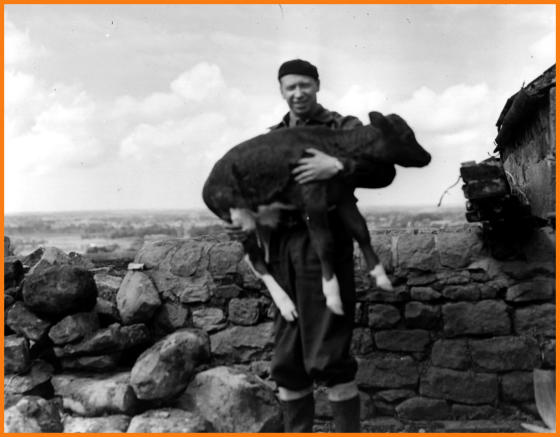
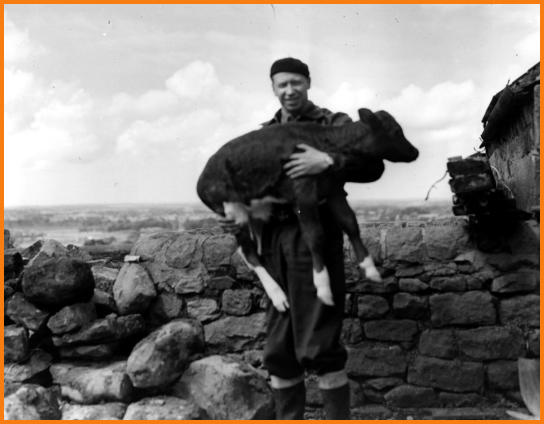
GEORGE FANCIED THE FARMING LIFE!
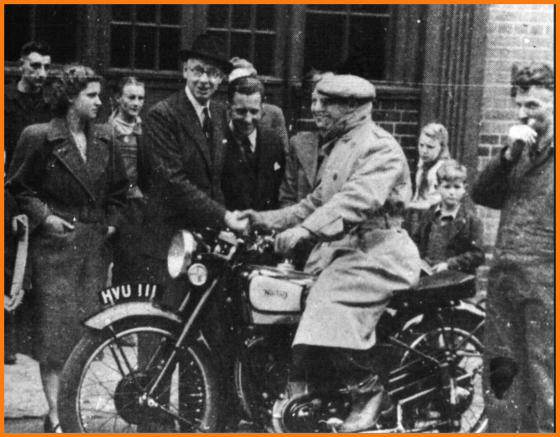
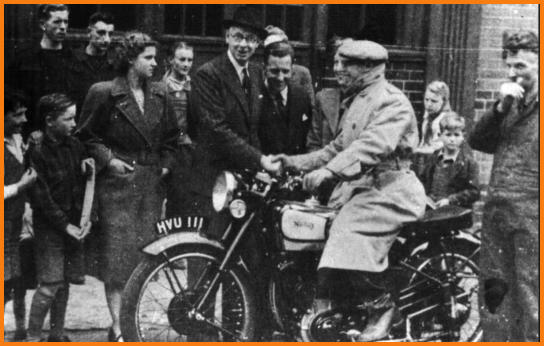
GEORGE RECEIVES A GIFT FROM THE NORTON WORKS IN BIRMINGHAM
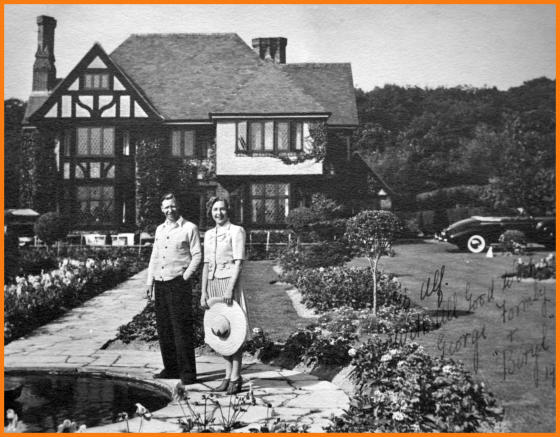
GEORGE AND BERYL AT HOME AT MAINS LANE, SINGLETON




Alan’s Introduction
We are all aware of George's career from before 1936 and during the war but I have always been rather vague about what he did from the end of the war until his untimely death in March 1961. In view of this I have done a little research and with the help of founder member John Walley I have managed to put most of the story together. This series of articles was first published in the early 90s, so in view of the many new members who have joined since then I have re-written them and added to them with some more recently learned facts.House Sale
In 1945 George sold the house in Mains Lane, Singleton, to a Blackpool manufacturer and decided he wanted to become a gentleman farmer. He bought a farm with a large gentleman's house and a cottage near Garstang, called Sullom End. He bought some calves in Penrith to start off his "Beryldene herd". The calves were named "Beryldene George", "Beryldene Funny", Beryldene John Willie" and "Beryldene Beryl". George used to go to the Co-op in Garstang on his motorbike to do some shopping.George Sells His Farm
The Trade Show of George in Civvy Street was held on 10th April 1946. It is not known why only nine months later George sold the farm to the owner of Blackpool Pleasure Beach, Mrs. Thompson who lived there until she died on 23rd June 2004, aged 101. In May 1946 George flew to Sweden and was paid £1,200 for three concerts in Copenhagen and Stockholm. In Stockholm on 17th May 1946 the orchestra under the direction of Thore Jederby, had some trouble with George's music but George battled through and the audience seemed to enjoy the songs even though George had trouble explaining what the words meant! George went down so well that a further three concerts were arranged for the Tivoli Gardens where he was paid a further £1,200 and then ended the tour with concerts at Odense and Aarhus. They returned to England and he spent the next three months tending his herd and tinkering with his motorbikes. He did a few charity concerts to aid relatives of servicemen who were killed and injured in the war.South Africa
In October 1946 the Formbys flew to South Africa for what would turn out to be a problematic tour. The head of the National Party, Mr. Malan, who two years later was to introduce Apartheid would not allow the native Africans to attend any of George's concerts. Beryl promptly arranged concerts for blacks only which were held in run-down venues in seedier parts of the town and had to pay for an armoured vehicle and police escorts to take them to the venues. In all twenty shows were given and George did not accept a penny for doing them - a move which resulted in the Formbys virtually being ordered to leave the country and were ordered "not to return". When they returned to England from South Africa they immediately began rehearsals for Dick Whittington at the Liverpool Empire. Beryl's parents had been living with them for the past twenty years and just before the curtains opened for the first performance Beryl got a phone call from the housekeeper informing her that her father had just died. The funeral was on Christmas Eve, so it must have been quite a traumatic year for them. After two months of sell-out performances they went down to Norfolk for a short holiday and a local newspaper reported that George was looking to buy a cruiser and also that Beryl was admitted to hospital for observation. She spent three weeks in hospital because she had to have a small operation and after a few weeks' rest George played two weeks at the London Palladium with Billy Russell as supporting act.The Norton Factory
In July George travelled to Birmingham to do a charity Workers' Playtime at the Norton motorcycle factory and was well recompensed when the managing director presented him with the first Norton Manx International off the assembly line since the end of the war. George would hardly ever ride the machine, he said it was too powerful and later sold it for £250, giving the money to charity.Touring
During the next two years George and Beryl embarked on a series of Commonwealth tours leaving a nervous housekeeper in the large house at Mere. In September 1947 they left for Australia via New York and Hollywood. The high life in America didn't suit George, he was like a fish out of water, and after several glitzy parties they left for Australia. In Sydney George made an address at a film convention but the real tour was to start off in Melbourne. On the morning of the first show George was asked if he intended to do non musical sketches as well as his musical act. As it was his intention to do comedy sketches he was told that he would have to join the Australian Equity and pay twelve months subscription, otherwise he would not be able to perform. George's first reaction was to ask Beryl to book seats on the next flight home, but Beryl said "We won't be submitting to petty bureaucracy and we will be off to New Zealand in the morning and the Australians can either like it or lump it." They left for New Zealand the next day and spent eight days there from 17th to 24th September. He was able to fit in some sightseeing with theatre engagements, two radio interviews and a half hour radio programme in Auckland (just George, Beryl and the pianist). By 26th September they were back in Sydney again receiving a fee of £1,000 for official engagements and gave several charity performances for the Food for Britain fund. Remember, Britain was still on rationing until the early 1950s. George stayed "On the other side of the world" for most of the Australian summer. It must have been a world apart down under with the tremendous reception he received in the theatres, the sunshine and abundance of food. In January 1948 George was back in Melbourne having settled the argument with the Australian Equity, and the records show that he did an interview on "Stage Door" Radio 3AW.Besieged with work offers
When they arrived back in England George was besieged with film offers all of which he turned down saying "My days of clowning are over, from now on I'm only doing variety." The truth was that he was quite tired, the tours had taken a lot out of him and the doctors were treating him for a gastric ulcer. However, in December he opened in Cinderella at the Liverpool Empire playing Buttons for the first time and on his usual £1,000 per week while the rest of the cast were struggling on £20 per week. George was overheard to call them "A bunch of Communists" for threatening to go on strike. He had a row with Harry Scott, his personal assistant, because he agreed that they were underpaid and that they were justified in their actions. After an argument Scott left Liverpool and George and Beryl chased him back to Blackpool where they found him drowning his sorrows in the Opera House bar. They brought him back to Liverpool in the Rolls and gave the chorus a rise in salary without discussing it with the management.George moves house again
In 1949 George bought a house called 'Linden Lea' on the seafront at St. Annes- on-Sea, just round the corner from the White Church on Granny's Bay near the end of the Esplanade. In the summer of that year they stood in for Donald Peers who had laryngitis in the show Buttons and Bows at the Grand Theatre, Blackpool, and then in September 1949 they flew to Canada where they celebrated their Silver Wedding Anniversary on 24th September. On 3rd October George was interviewed in Hamilton, Ontario, and on the 31st he was in Vancouver. At the end of the tour they travelled to Toronto on the other side of Canada then sailed back to Liverpool on the Empress of France, spending much of the crossing in their cabin suffering from flu.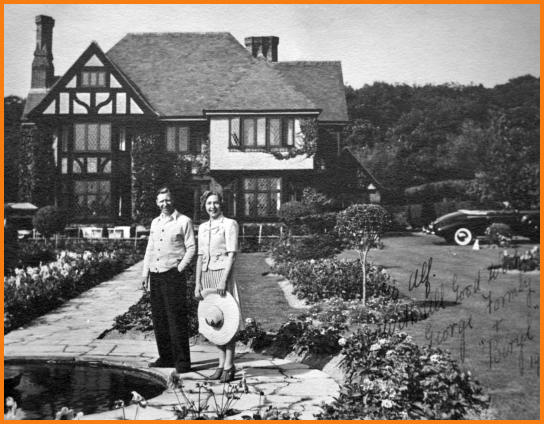
George Formby
The Story From 1945 - Part One by Alan Southworth

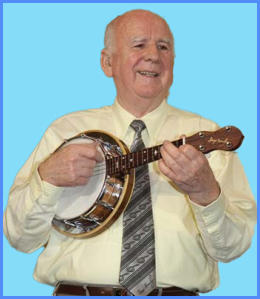
I met Alan for the very first time when I
attended my first Blackpool convention
sometime in 1991 or 1992. I travelled
alone and only for the one day, but I
already knew many of the Yorkshire lads
through my association with the
Yorkshire Ukulele Circle: Dennis
Mitchell, Dickie Speake, Mac McGee,
Dennis Taylor, and several others.
I spoke with Alan for a while on that first
day. He used to record the meetings on
a cassette recorder, which he would
place at the side of the stage. I was
immediately drawn to Alan’s playing style
and his talent as a top performer. As I
got to know him better, I began making
sleeves for his recordings, with the name
of the artist and the songs performed.
Eventually, his wife Hilda took over when she became familiar with using a
computer.
I always felt that Alan could have done anything in the GFS, he was devoted to it
and was a dedicated, hard-working committee member and contributed a great
deal of writing to the GFS magazine. In short, Alan Southworth was one of the
best ever members of the George Formby Society, and whilst the GFS continues
to function, he will never be forgotten.
The words he penned on these pages have appeared in The Vellum twice: once
in the 1990s, under the title The Story From 1946, and again between 2012 and
2013.
Some people may wonder why it is repeated here. The reason is simple. During
my long friendship with Alan, he gave me many papers he had written, and one
in particular caught my eye: fourteen A4 pages titled The Story Since 1945. Now,
not only will later members of the GFS be able to read Alan’s words, but they will
also be available to any George Formby enthusiast who visits the website.
PP - 12/2025

GEORGE FANCIED THE FARMING LIFE!
GEORGE AND BERYL AT HOME AT MAINS LANE, SINGLETON
GEORGE RECEIVES A GIFT FROM THE NORTON WORKS IN BIRMINGHAM